
0
INQUIRY
enquiry form:
Inquiry Content:

You have no items to require
-
 English
-
Polski
-
فارسی
-
Dansk
-
Deutsch
-
Русский язык
-
Français
-
қазақ
-
한국어
-
Nederlands
-
Hrvatska
-
Latina
-
norwegian
-
Português
-
日本語
-
Svenska
-
Srpski@ item Spelling dictionary
-
Slovenská
-
slovenščina
-
Türkçe
-
УкраїнськаName
-
o'zbek
-
Español
-
Magyar
-
Արմենյան
-
Italiano
-
IndonesiaName
-
Tiếng Việt
-
عربي
-
Íris
-
Български
-
ÍslandName
-
suomi
-
Čeština
-
română
-
Malay
-
ภาษาไทย
-
Ελληνικά
 English
 Polski
 فارسی
فارسی
 Dansk
Dansk
 Deutsch
 Русский язык
 Français
 қазақ
қазақ
 한국어
한국어
 Nederlands
 Hrvatska
 Latina
 norwegian
 Português
 日本語
日本語
 Svenska
 Srpski@ item Spelling dictionary
 Slovenská
 slovenščina
 Türkçe
 УкраїнськаName
 o'zbek
 Español
 Magyar
 Արմենյան
 Italiano
 IndonesiaName
 Tiếng Việt
 عربي
عربي
 Íris
Íris
 Български
 ÍslandName
 suomi
suomi
 Čeština
 română
 Malay
Malay
 ภาษาไทย
 Ελληνικά

Multi functional intelligent mobile terminal
Multi satellite system high-precision positioning、satellite mobile phone
Scan、RFID、 Fingerprint recognition, facial recognition
Infrared thermography, temperature detection, toxic gas detection
Public network intercom, analog intercom, digital intercom(DMR)
Multiple data interfaces: RS232/485、RJ45、USB3.0、Type-C、HDMI
How Dual-Antenna GNSS RTK Technology Enables High-Precision Positioning in UAV and Autonomous Systems
2026-03-31 12:33:08
Click:
“
Dual-antenna GNSS RTK technology is transforming high-precision positioning by delivering centimeter-level accuracy and real-time heading capabilities. By integrating multi-constellation, multi-frequency tracking with advanced RTK and PPP algorithms, this technology ensures reliable performance even in complex environments. It plays a critical role in applications such as UAV navigation, autonomous systems, and precision agriculture, where accuracy, stability, and anti-interference capability ar
”
With the rapid development of UAVs, autonomous vehicles, and precision agriculture, the demand for high-precision positioning has increased significantly. Traditional GNSS solutions are no longer sufficient for applications that require both centimeter-level accuracy and reliable heading information.
Dual-antenna GNSS RTK technology is emerging as a key solution to meet these requirements.
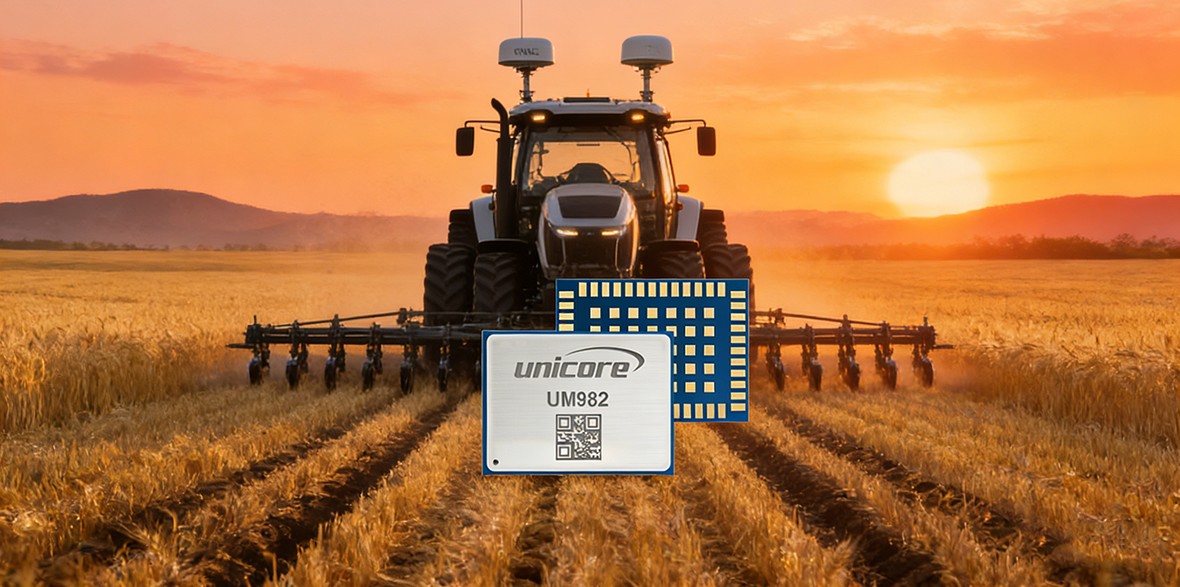
What is Dual-Antenna GNSS RTK?
Dual-antenna GNSS RTK (Real-Time Kinematic) positioning uses two antennas to simultaneously receive satellite signals. While one antenna determines position, the second antenna calculates precise heading (orientation) based on phase differences.
Compared with single-antenna systems, it offers:
- Higher positioning accuracy
- Real-time heading without movement
- Improved stability in dynamic environments
Key Technologies Behind High Precision
1. Multi-Constellation and Multi-Frequency GNSS
Modern GNSS modules support multiple satellite systems, including:
- GPS
- BeiDou (BDS)
- GLONASS
- Galileo
- QZSS
Multi-frequency tracking significantly reduces signal errors such as ionospheric delay, improving accuracy and reliability.
2. RTK and PPP Integration
RTK provides centimeter-level accuracy through real-time correction data, while PPP (Precise Point Positioning) enables high precision without local base stations.
Combining both technologies allows:
- Flexible deployment
- High accuracy in remote areas
- Faster convergence
3. Dual-Antenna Heading Technology
Dual-antenna systems calculate heading with extremely high precision (up to 0.1° accuracy), which is critical for:
- UAV flight control
- Autonomous navigation
- Marine heading systems
4. Anti-Jamming and Interference Suppression
In real-world environments, GNSS signals are often affected by electromagnetic interference.
Advanced modules integrate:
- Narrowband anti-jamming (up to 60 dB)
- Interference detection
- Signal filtering
This ensures stable performance even in complex environments.
Application Scenarios
UAV and Drone Navigation
Dual-antenna GNSS enables precise flight control, accurate waypoint navigation, and stable hovering.
Precision Agriculture
High-precision positioning supports automated farming equipment, improving efficiency and reducing resource waste.
Autonomous Robots and Vehicles
Reliable positioning and heading data are essential for path planning and obstacle avoidance.
Marine Navigation
Accurate heading and positioning improve safety and navigation efficiency in maritime environments.
Why High-Precision GNSS Matters
As industries move toward automation and intelligence, positioning systems must provide:
- Higher accuracy
- Greater reliability
- Faster response
- Stronger anti-interference capability
Dual-antenna GNSS RTK technology is becoming the foundation of next-generation positioning solutions.
Conclusion
Dual-antenna GNSS RTK technology represents a major advancement in high-precision positioning. By combining multi-frequency GNSS, RTK, PPP, and anti-jamming technologies, it delivers unmatched performance for modern applications.
For industries such as UAVs, robotics, and precision agriculture, adopting advanced GNSS solutions is no longer optional—it is essential for achieving efficiency, safety, and competitiveness.
Author:
Starmax International Technology Co., Limited








Prev : كيف تُحسّن أجهزة GNSS RTK المحمولة دقة المسح وجمع البيانات الجغرافية
Next : Enhancing Field Operations with the XM580G Rugged GNSS Smart Terminal
文章推荐
Enhancing Field Operations with the XM580G Rugged GNSS Smart Terminal
How GNSS RTK Handheld Technology is Transforming Field Surveying and Mapping
How Multi-Frequency GNSS RTK Modules Enable Centimeter-Level Positioning in Complex Environments
High-Precision RTK GNSS Handheld Device for Surveying and Mapping
Follow Us

点击右上角
分享给朋友吧
Copyright © 2015-2035 MySite Ltd. All Rights Reserved.
 Service1
 Service2
 Service3